Portfolio: Design Camp Explorations
Studies in virtual and physical community-building among learners
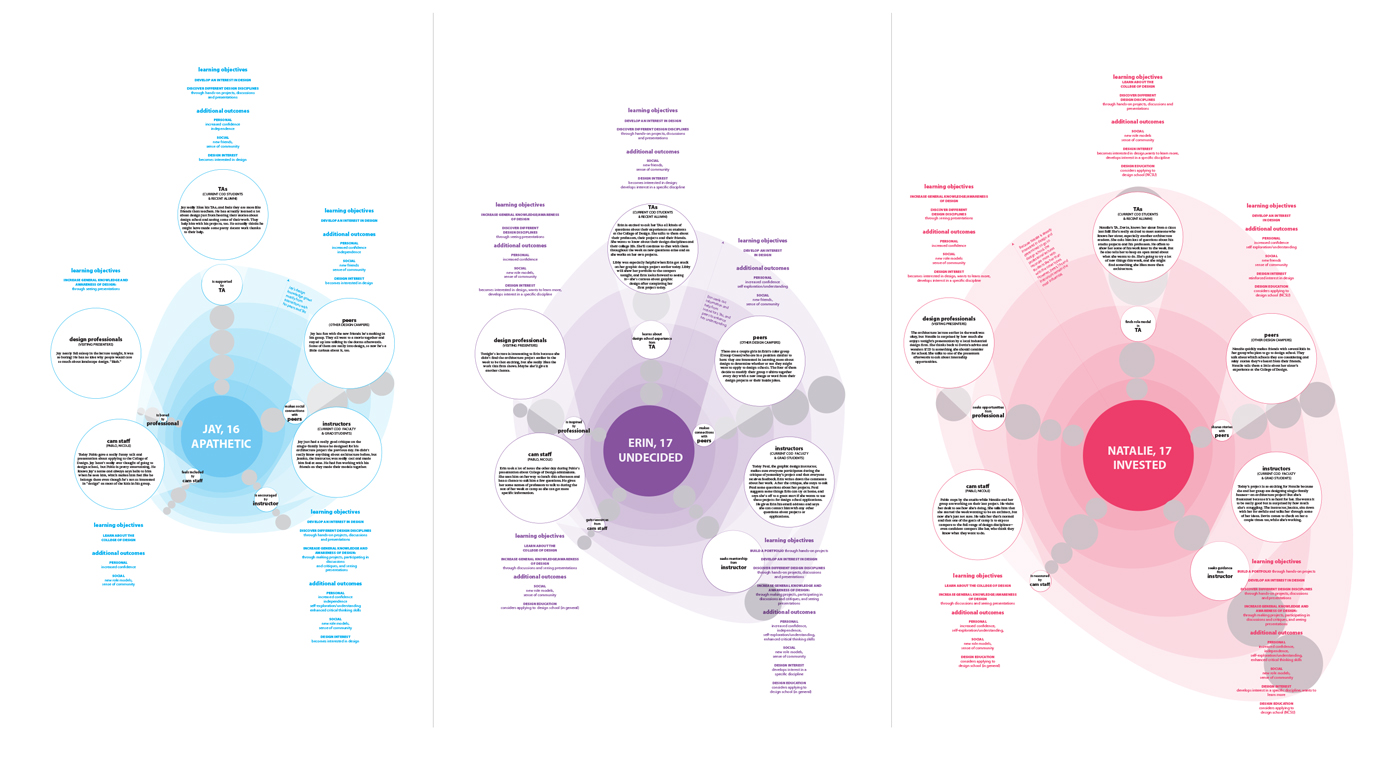
Mapping Learners: persona development
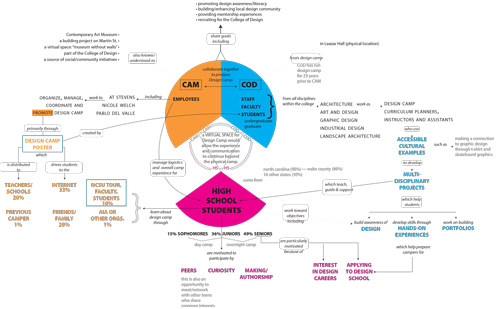 Design Camp Design Camp is an annual summer camp for high school students produced and staffed by NC State’s College of Design and the Contemporary Art Museum (CAM). Campers stay overnight in the dorms, work in the College’s design studios, and create amazing projects.
After a series of interviews with former design camp participants, staff, and administrators, and subsequent visual studies, I developed three camper personas represented in these maps as a starting point for several interactive projects centering around Design Camp. This is the static version of an interactive persona map that describes the effects of campers’ interactions with fellow campers, teaching assistants, instructors, Contemporary Art Museum (CAM) staff, and design professionals (who are guest lecturers or critics).
During the five days at camp (represented by the rings of the map), the campers’ exchanges with these key players literally shape the map. Where there are positive interactions that fulfill several of the campers’ learning objectives, the bands become wider; less meaningful interactions result in less growth. Because the campers arrive with different goals (or no goals) in mind, the central circles (the starting point for these expanding experiential maps) differ slightly in size, reflecting the campers’ relative investment.
A community/self-identification activity
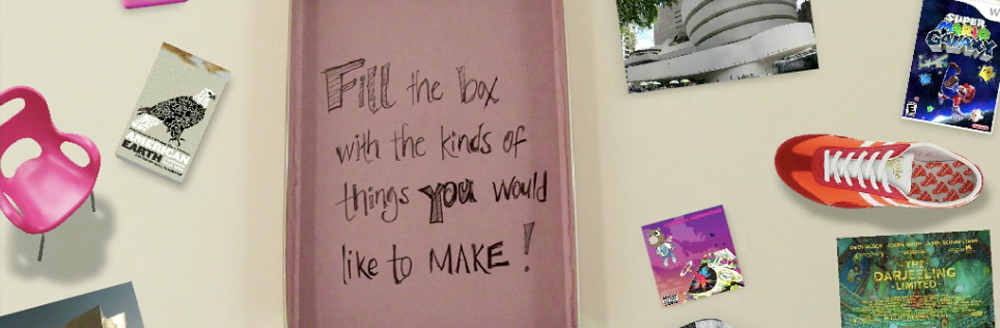
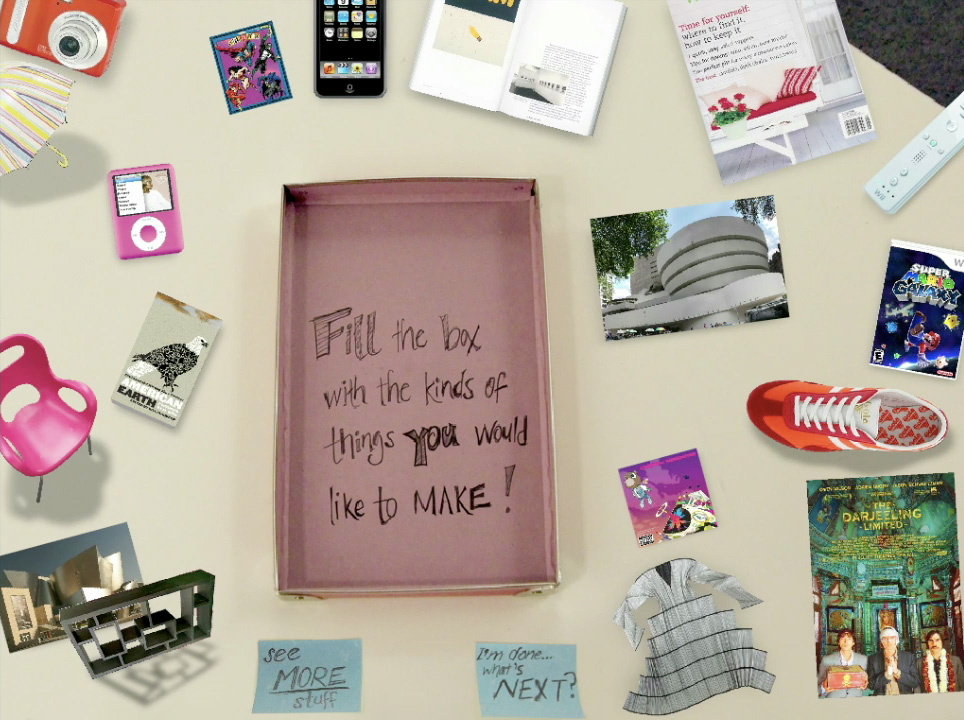
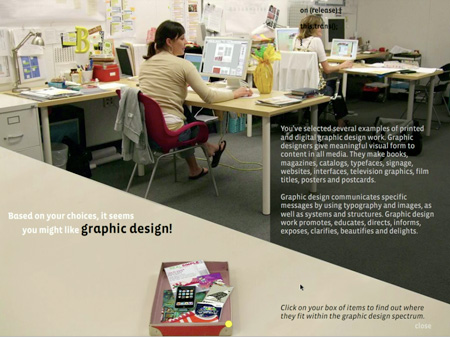
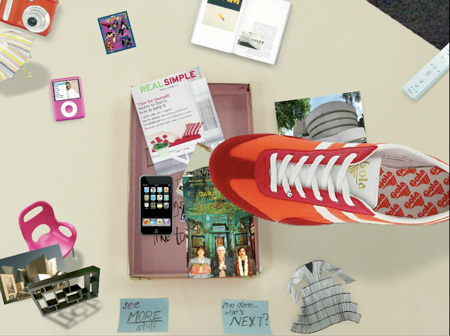
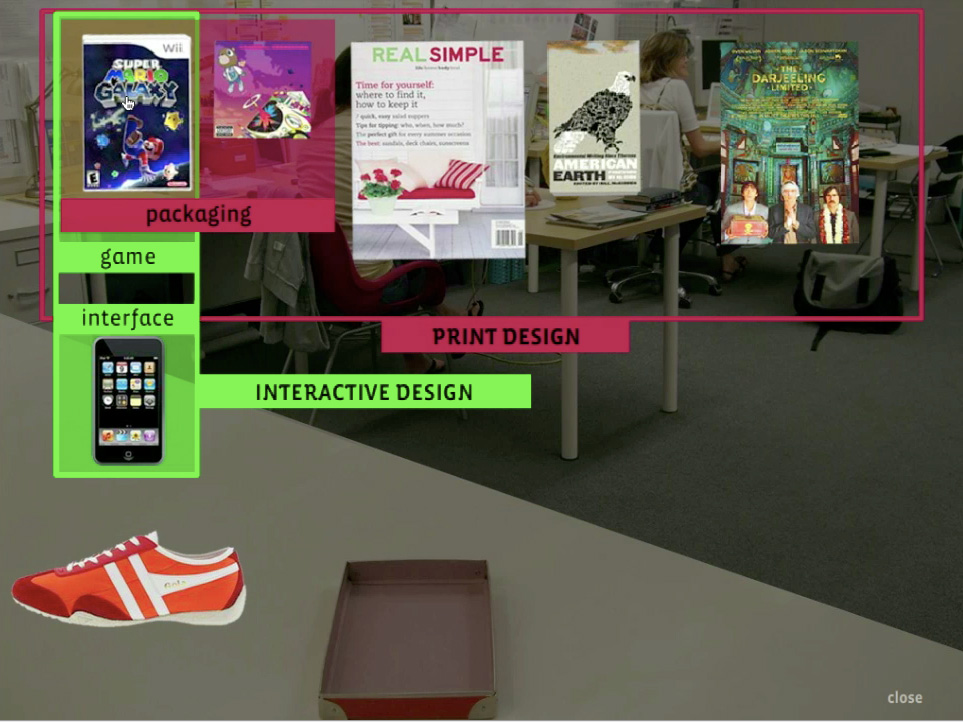
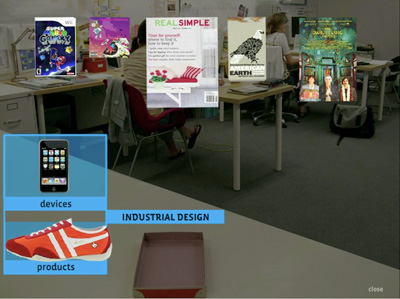
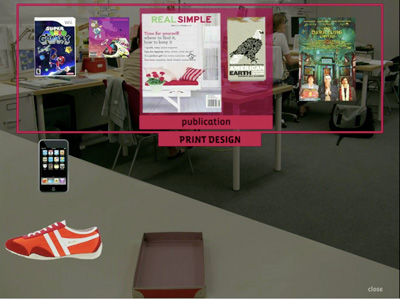
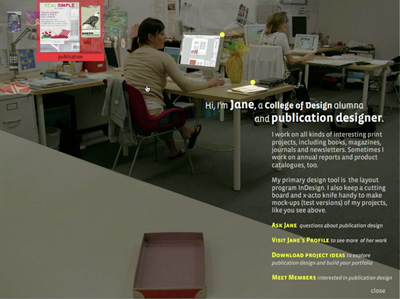
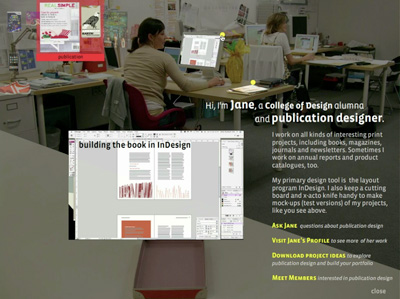
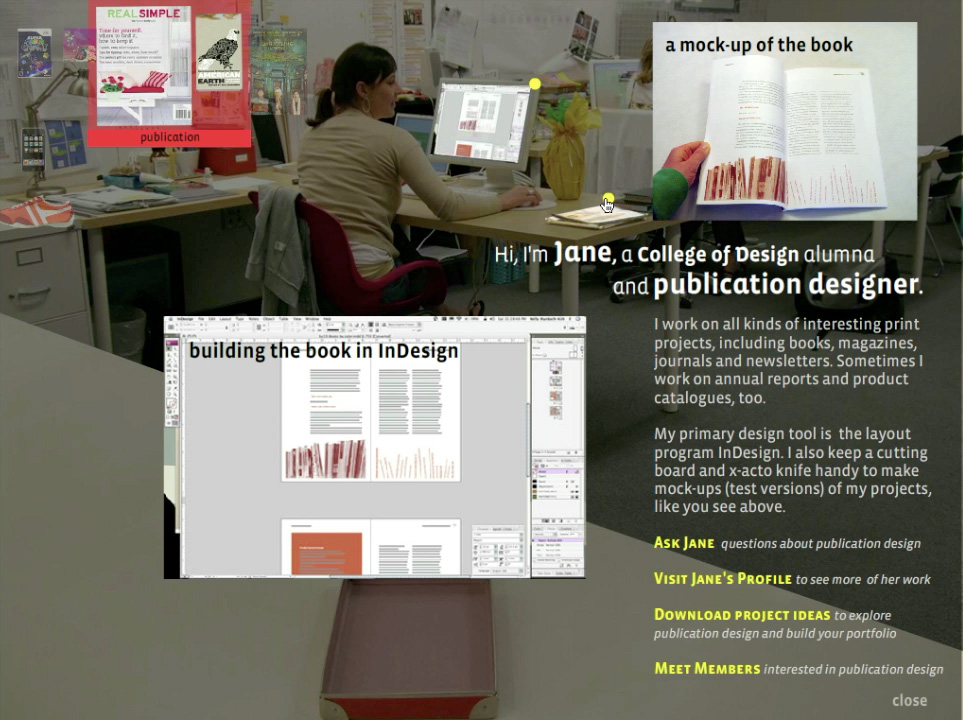
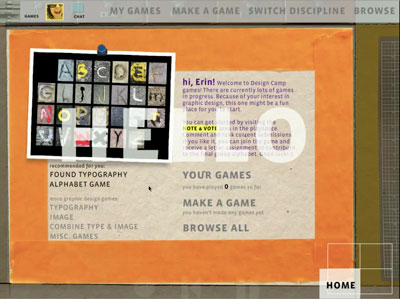
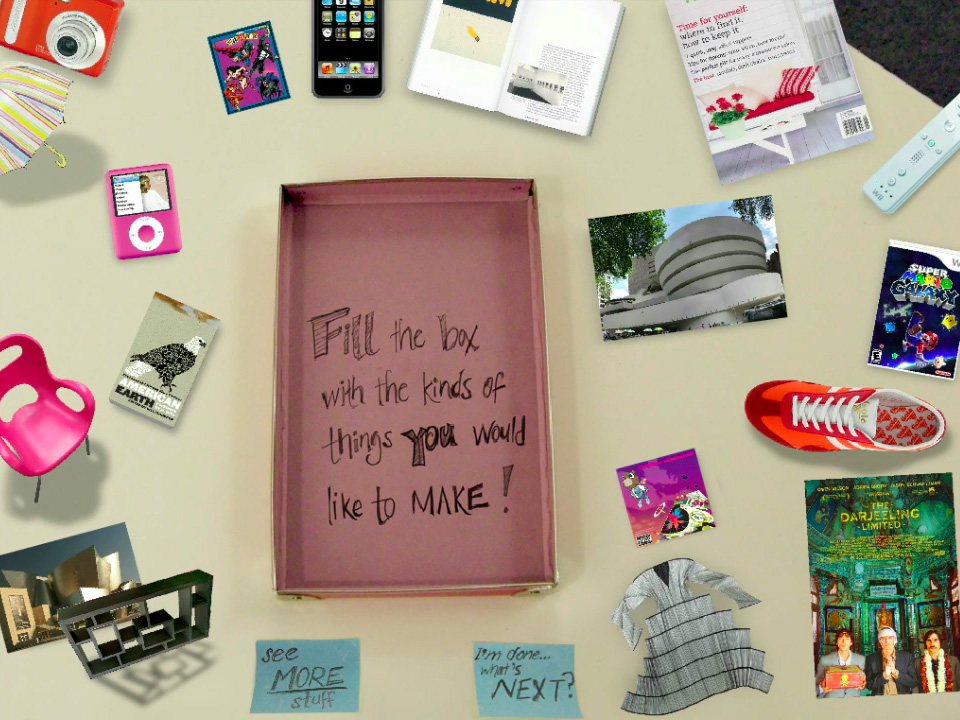
The entry point of this online community for Design Camp participants introduces high school students to design disciplines through interactions with everyday objects, helping make connections between the study/idea of design and real life. Once a student selects items she would like to learn to make, the site helps analyze her interests in terms of areas of study and/or potential career paths.
Going further, the site gives her more specific details about particular sub-disciplines, such as publication design, based on the items she has selected. The site also facilitates meeting members of the community who share similar interests, as well as possible mentors.
A generative & collaborative community task
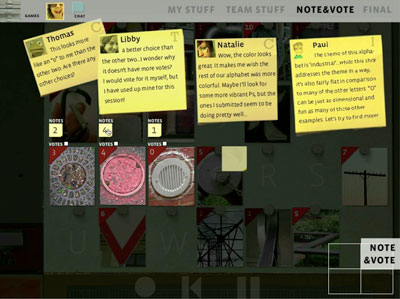
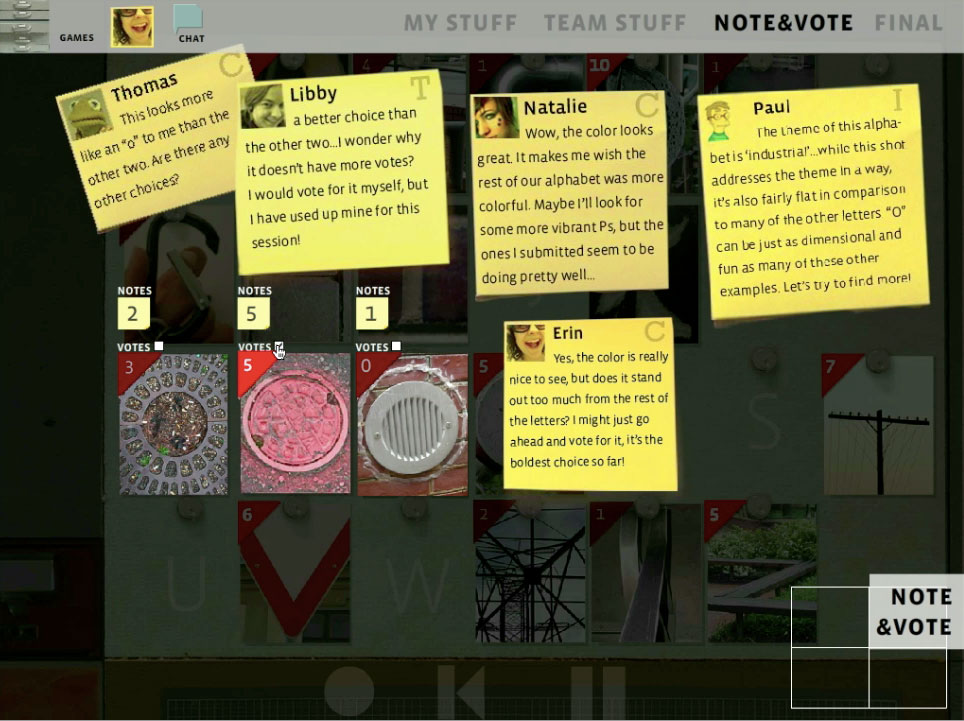
The visual language of this collaborative “found typography” game connects to the material study and practice of design, as well as the Design Camp experience through “review,” “editing,” and “presentation” spaces, as well as materials and textures familiar to the students from their time at Design Camp.
The game requires participation both in the form of contributing photos to the alphabet, as well as voting on submissions to create a cohesive alphabet around a central theme. Community members learn from and teach each other through commenting on each other’s uploads. Competing teams and the whole community work together to produce a final alphabet through voting on the letters that work best with the team’s theme.
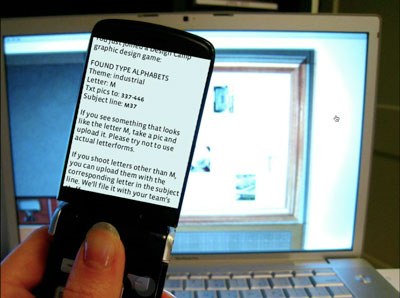
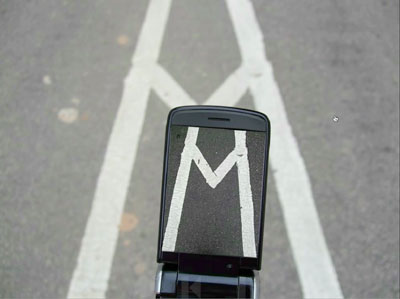
Mobile devices extend game play into the participants’ physical environments, encouraging them to view their surroundings with a critical eye, and to spontaneously capture and upload potential images.
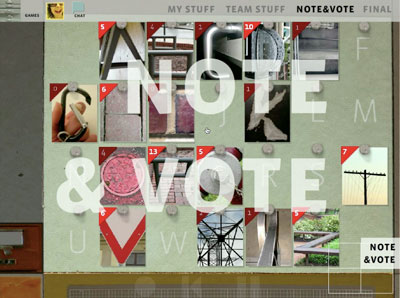
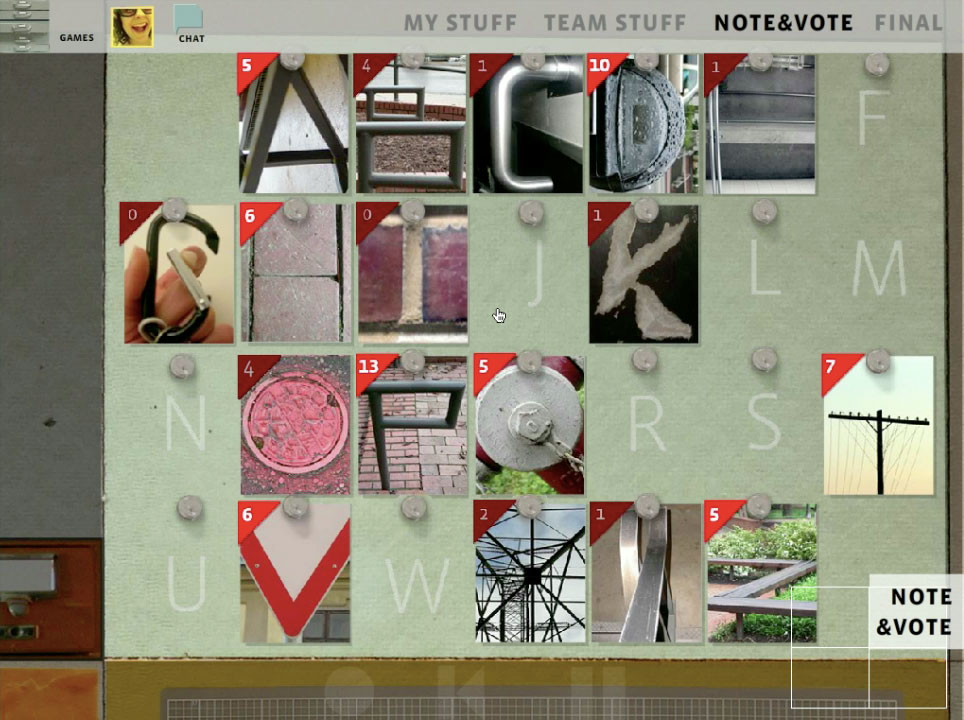
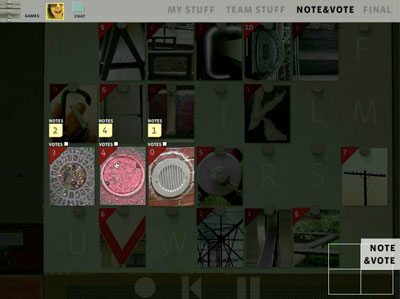
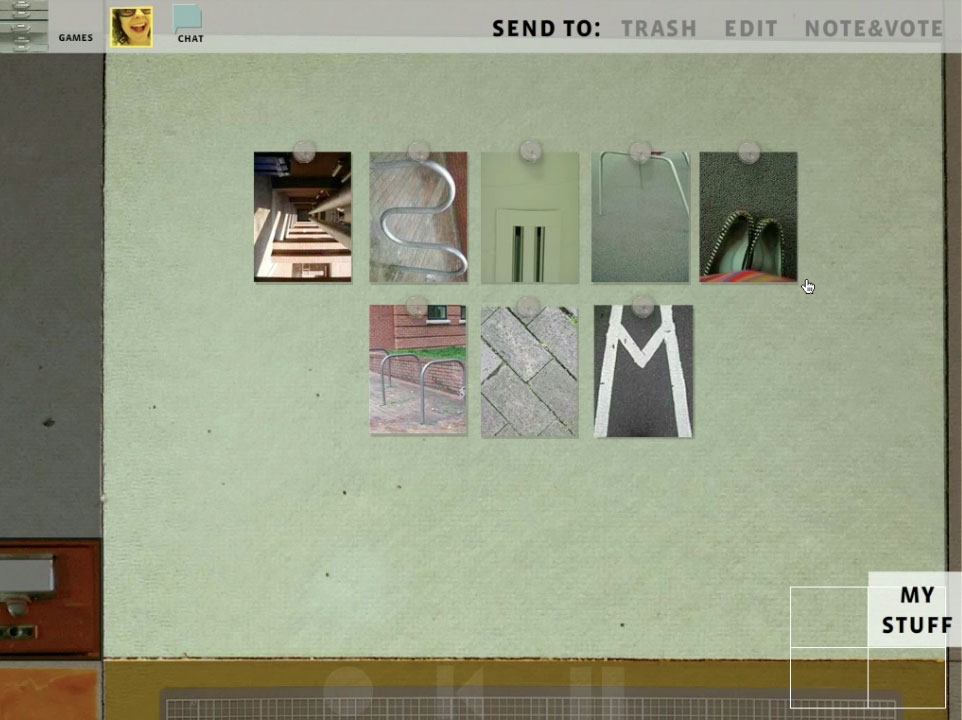
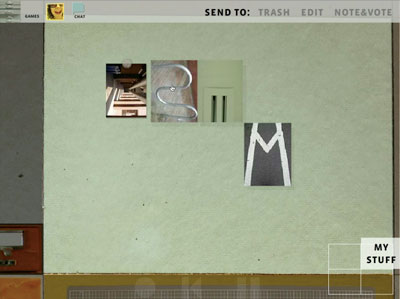
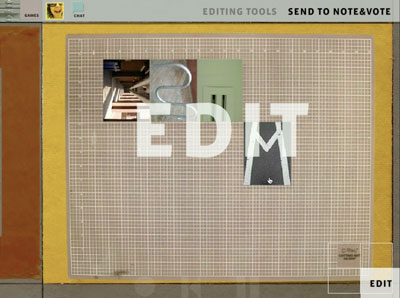
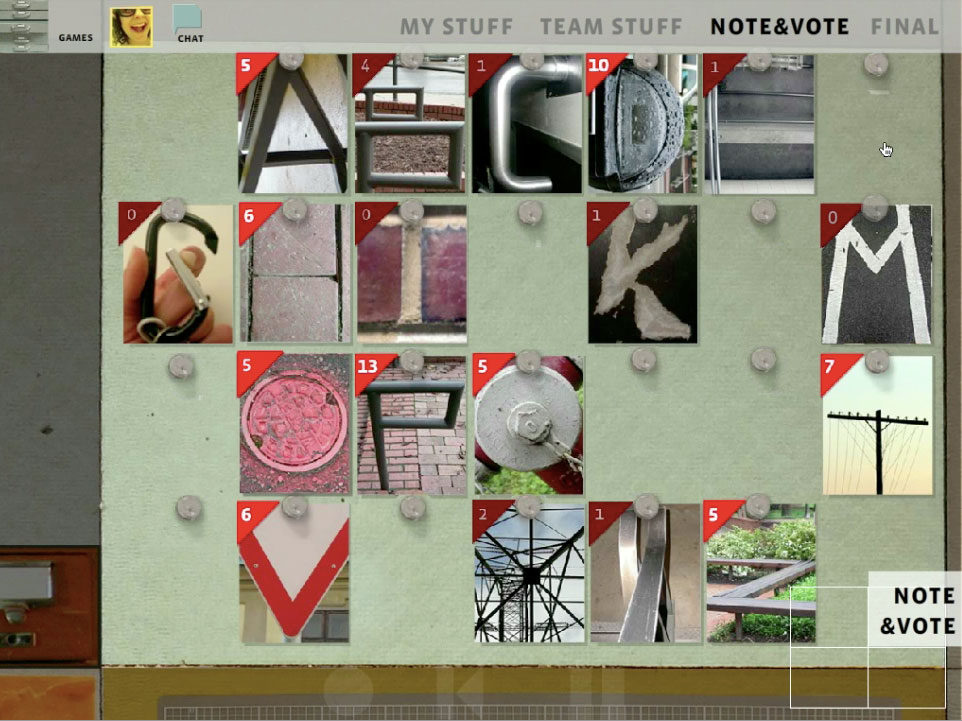
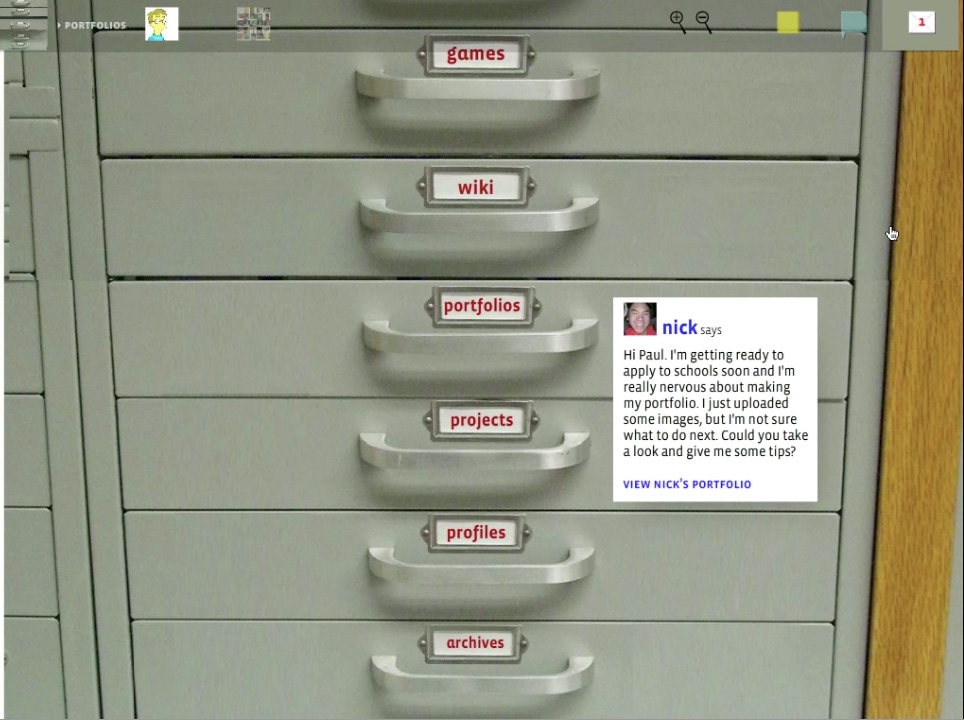
A productive exchange between members
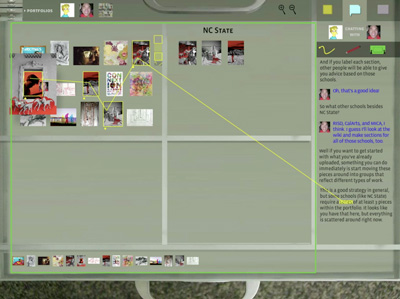
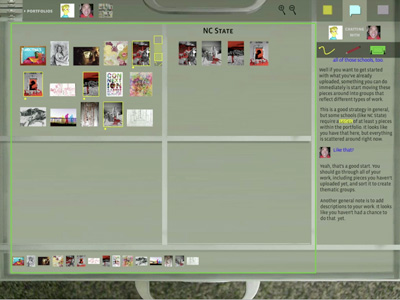
In this example, a Design Camp student engages in personal
development (preparing portfolios for design school applications) with
the support of his community, including peers and mentors. The “flat file
drawer” aesthetic cultivates an intimate, personal workspace.
Within a student’s individual “drawer” space, community members
submit feedback asynchronously (messages, post-it note comments) or
synchronously (chatting, sharing workspace).
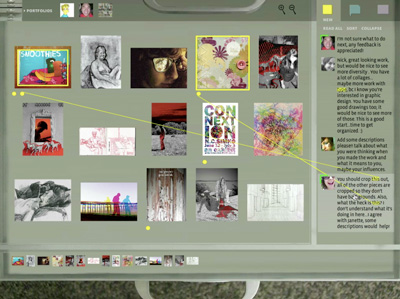
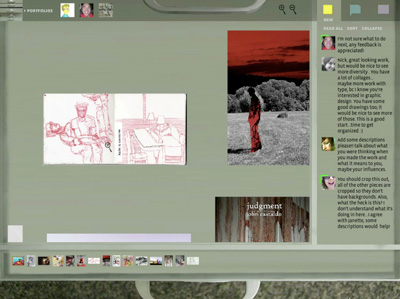
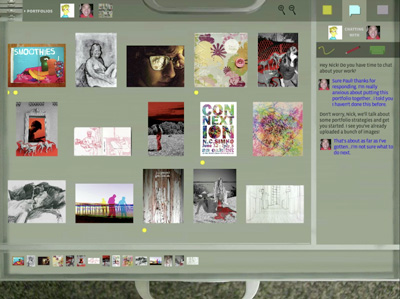
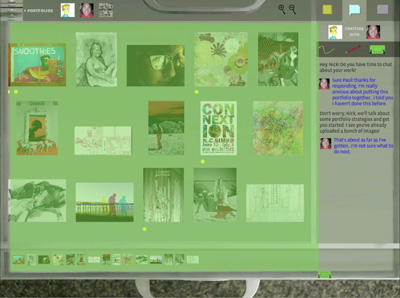
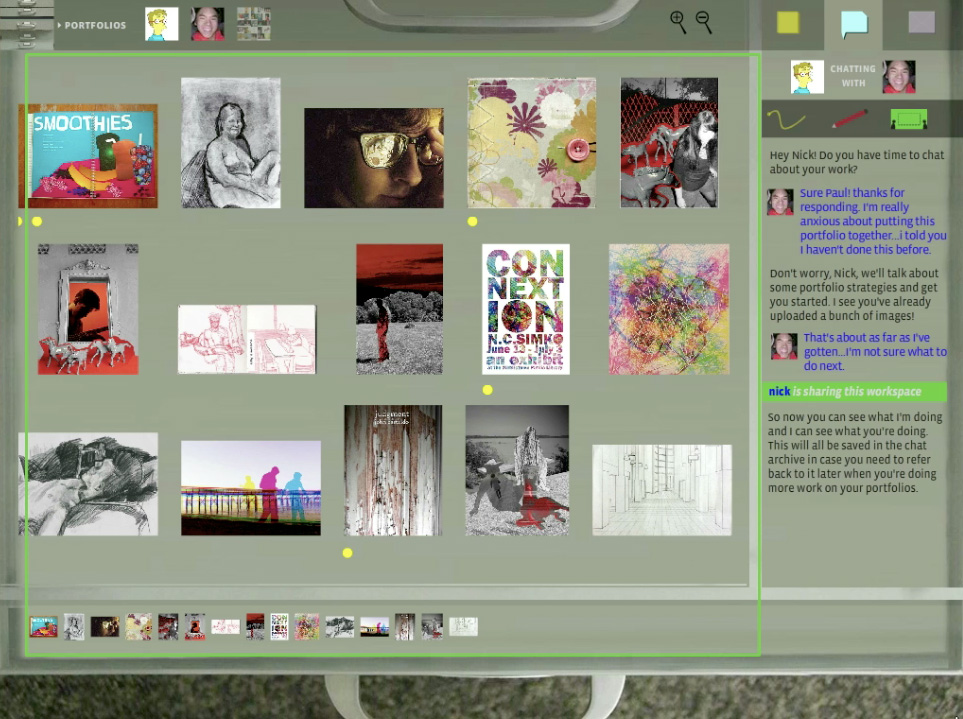
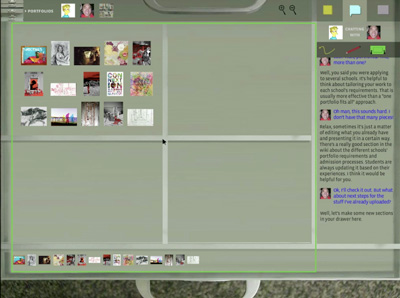
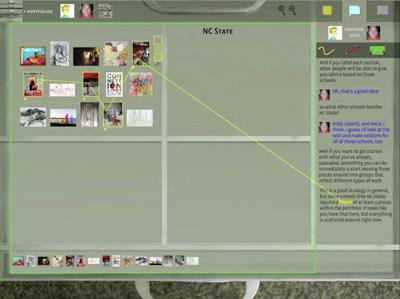
Sharing workspace/screen while simultaneously chatting allows
participants to communicate visually as well as verbally. In the images
below, a mentor requests to share the screen with a student (left), and
helps him sort his portfolio work in different ways for his various design
school applications.
Select another project
research / service
Master's Thesis
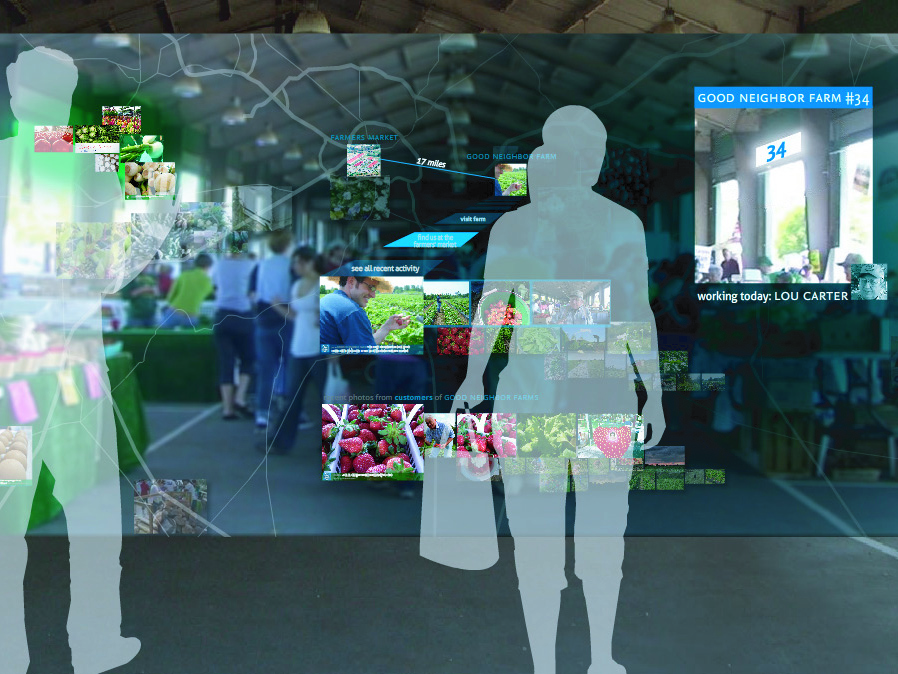
Leveraging social tools to build a sustainable food network
service
votesmartraleigh
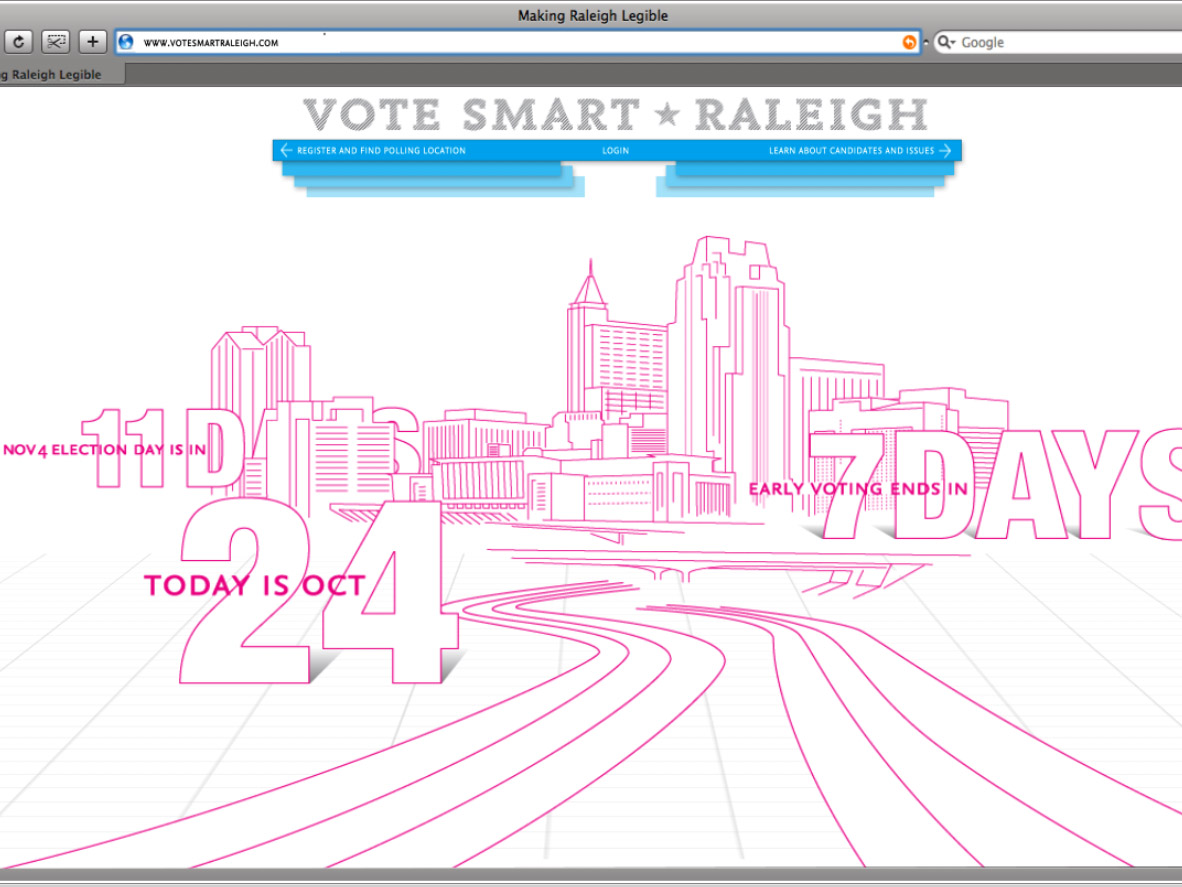
Orienting residents spatially & informationally to all aspects of the voting experience
research
the future of learning
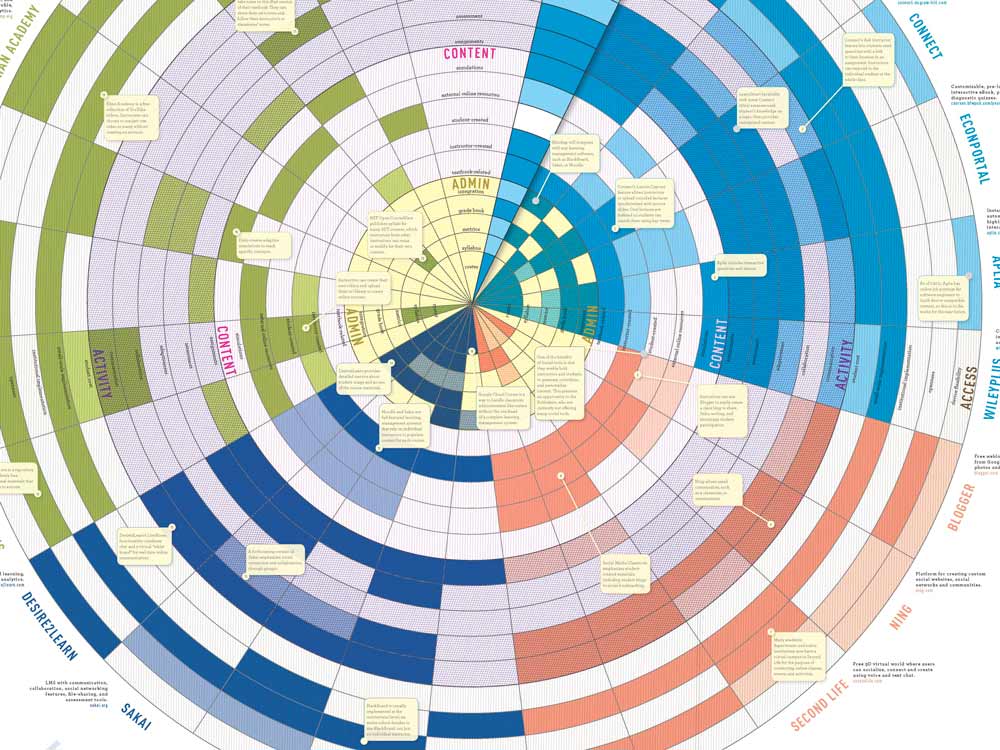
Investigating learners' habits, existing online learning tools, & assessing needs
interdisciplinary
bridging the gap
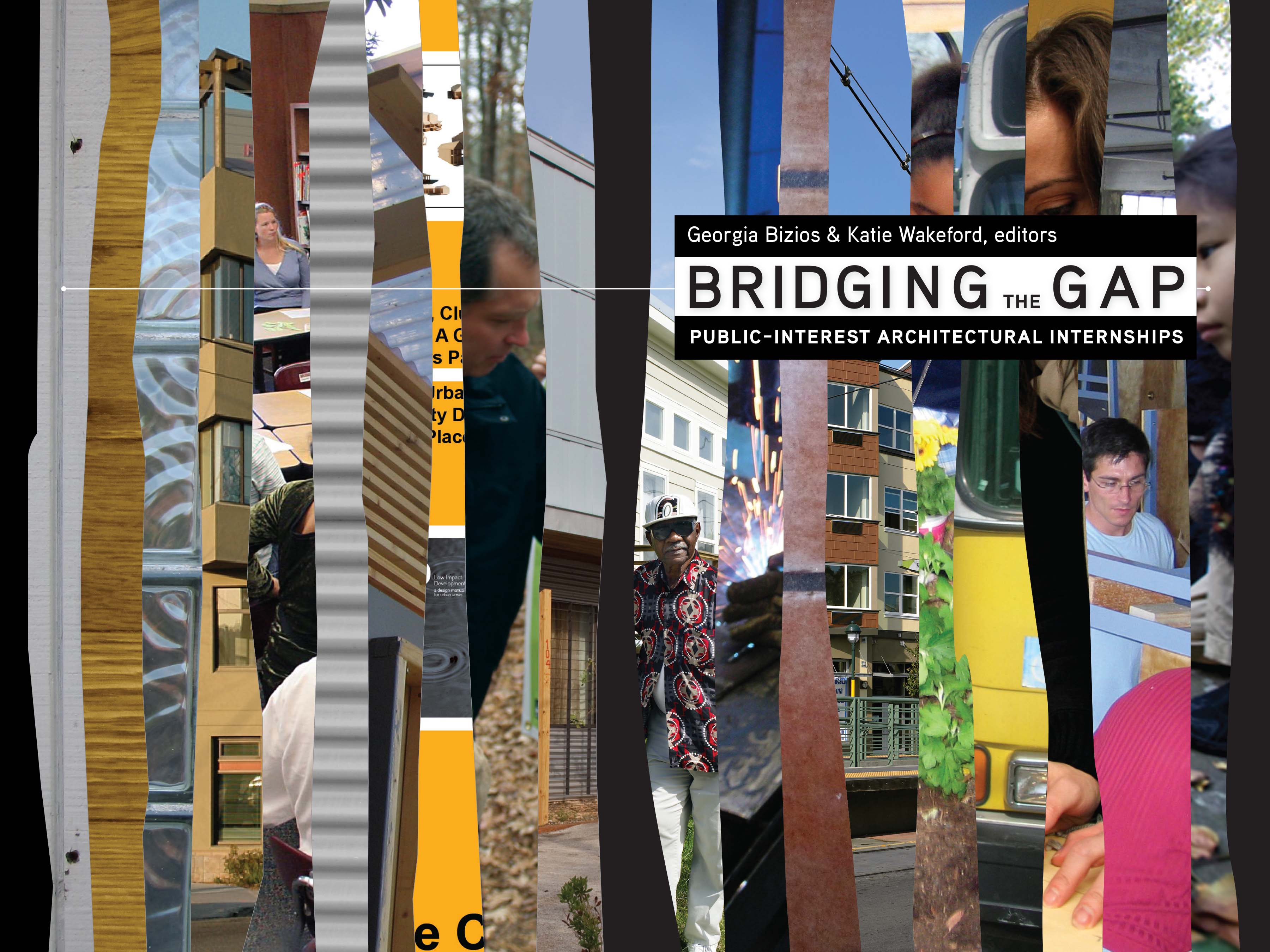
Book & ebook about public-interest architecture co-designed with architects
microsite
socialresponsibility
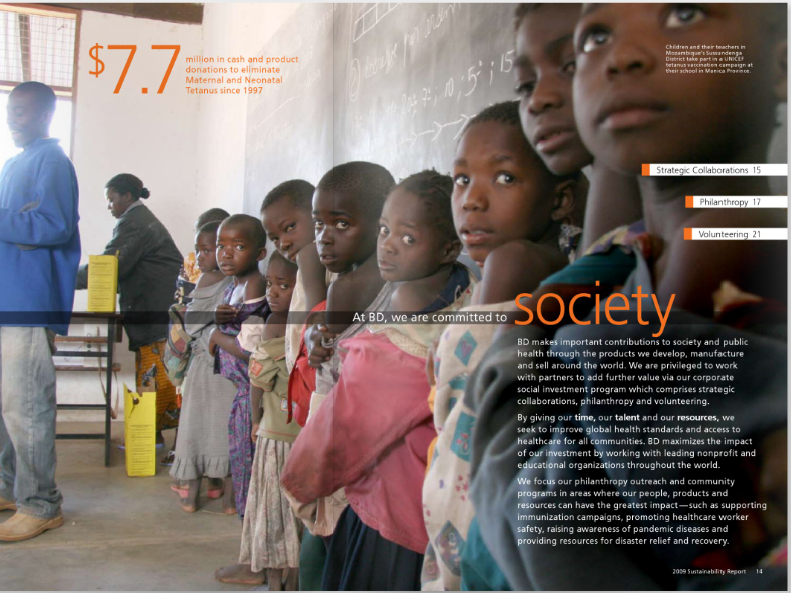
Corporate social responsibility microsite and companion ebook
research / workshop prompt
urban renewal
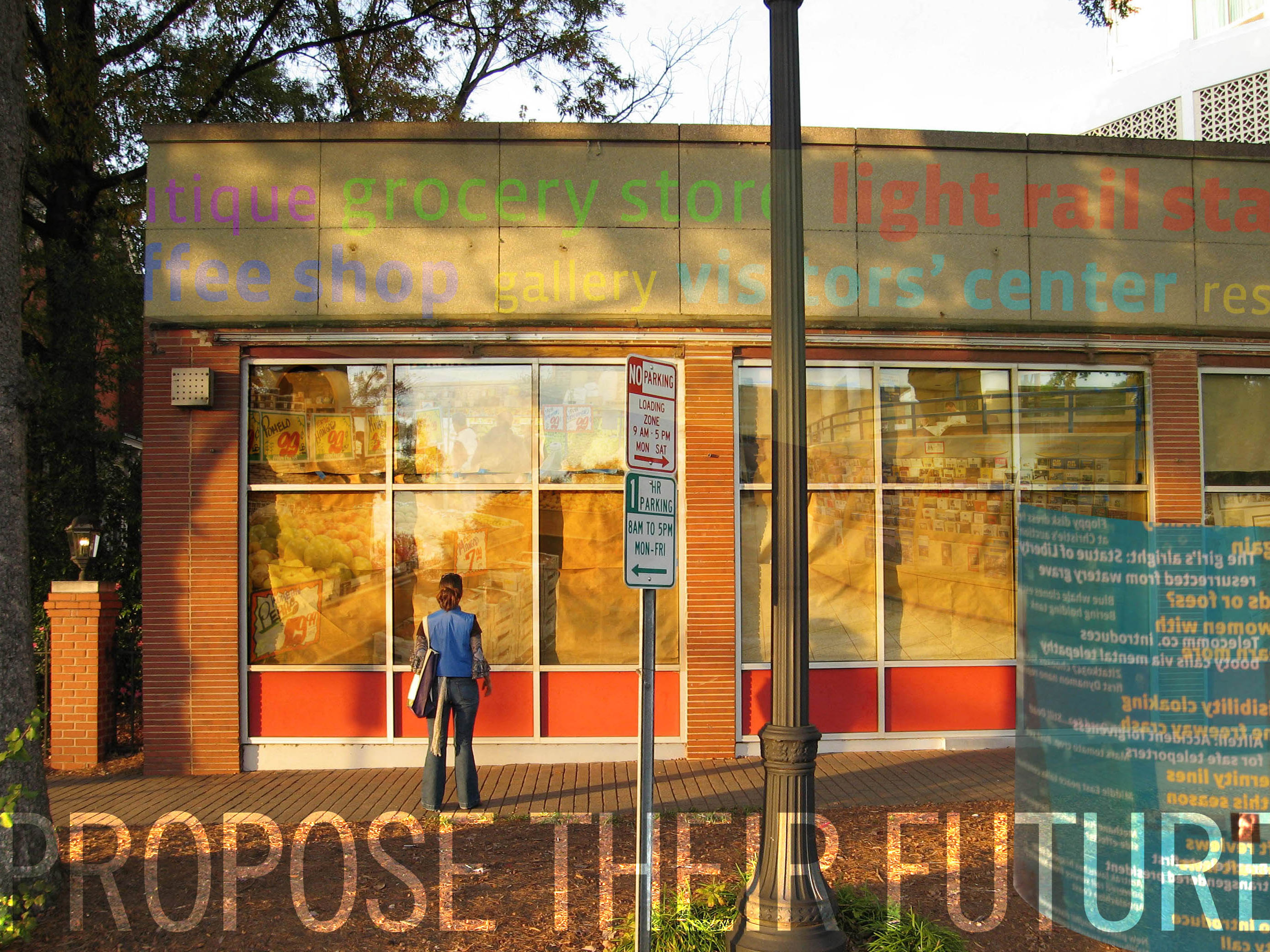
"What if these spaces were up for debate...and the public could propose their future?"
service
social cycle
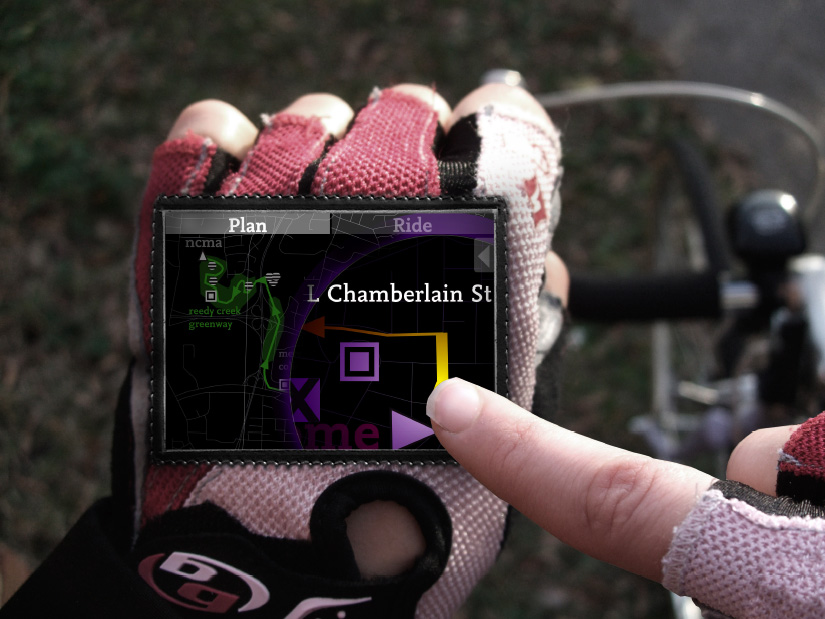
A wearable, multi-sensory wayfinding system created by and for cyclists.
YOU ARE HERE:
design camp explorations
Studies in virtual and physical community-building among learners
research / experience
invisible water
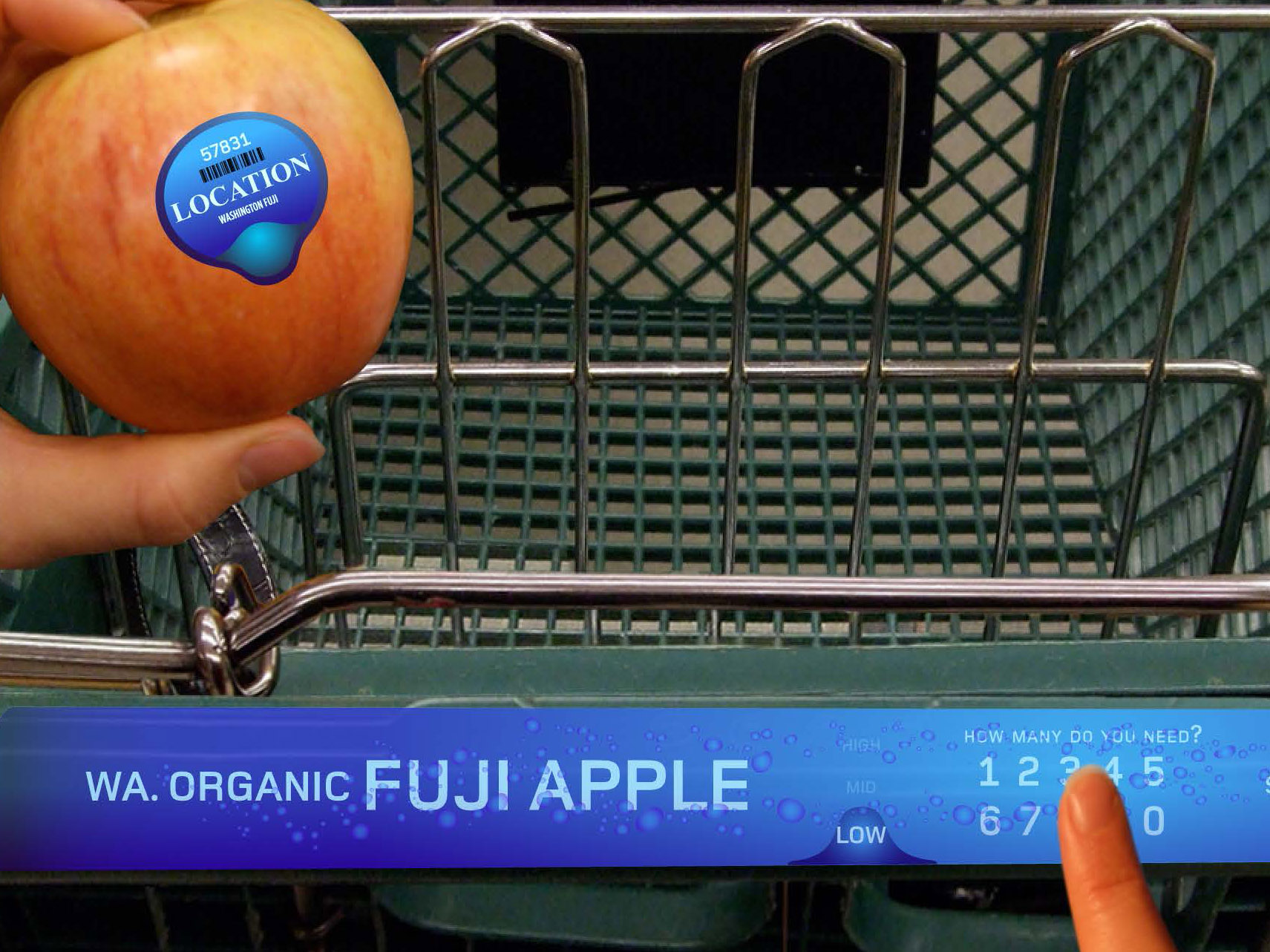
Prompting consideration of water use in unexpected ways at the grocery store.
collaboration
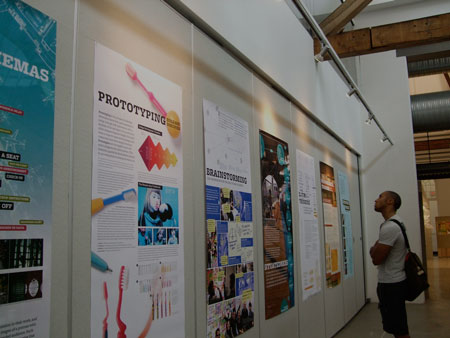
design thinking exhibition
In an effort to expose freshmen to Design Thinking, we designed an exhibiton about design. So meta.