Teaching: Stuck in a Food Desert
Service design and mobile prototype by Liz Wells, RIT '15
Stuck in a Food Desert
Liz Wells, RIT '14
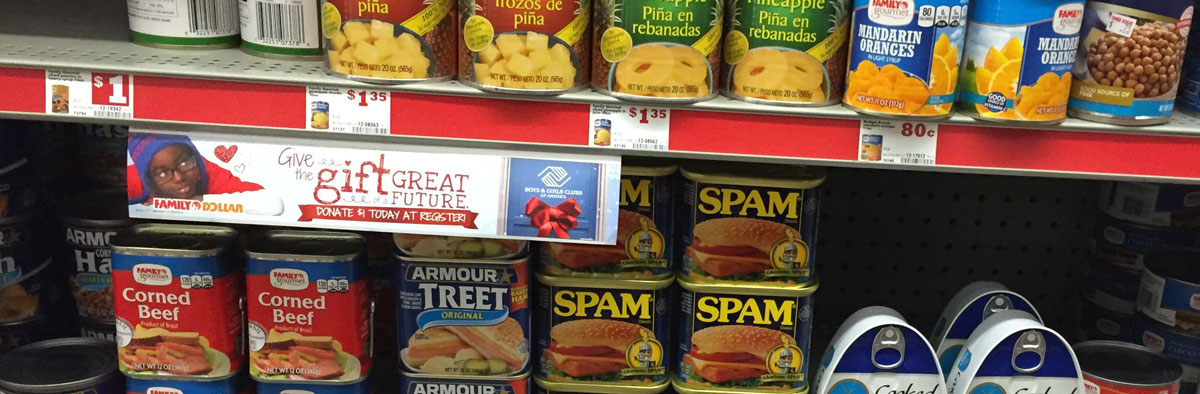
A food desert is an area that only have fast food, corner stores, and liquor stores. Typically these are low income areas and people lack transportation to buy food in better areas. 26.5 million americans live in a food desert. People are dying from curable deceases, such as obesity. These communities typically have no access to health care. Stuck in a (Food) Desert puts people in the uncomfortable situation of living in a food desert, without leaving the comfort for their desks.
PROJECT BRIEF
Designing for behavior change
Advanced Web & UX Design | Senior level | RIT
This project will be completely defined by your audience research and pursuant communication goals. Experiential and interactive media might include: activity, game, package, social media campaign, web, interactive space, or a combination of these approaches. Your number one objective is to share your outcome/intervention with the campus community to affect behavior change, whether through user testing, exhibit, implementation, or some other means you devise. Collaboration in this project is also incredibly important—you will be exchanging not only critique, but also ideas, concepts, styles and maybe even files with your partners in Qatar!
Liz says:
Food deserts are a problem. A 26-million-people problem. In the United States, food deserts are typically urban areas that have very little or no access to fresh foods. Many residents in these areas rely on government-provided Electronic Benefits Transfer (EBT), also known as Food Stamps, to pay for their food.
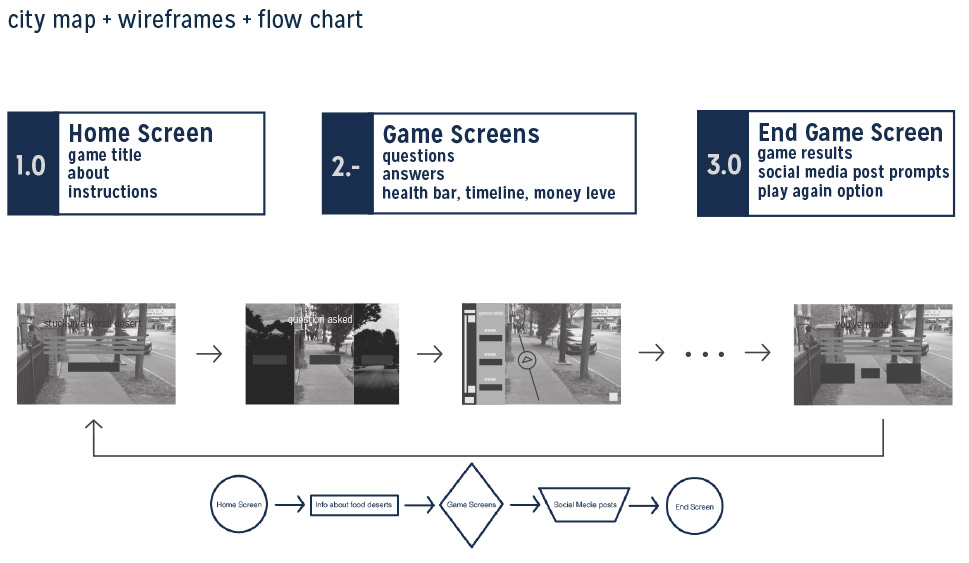
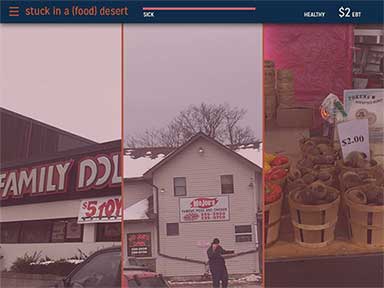
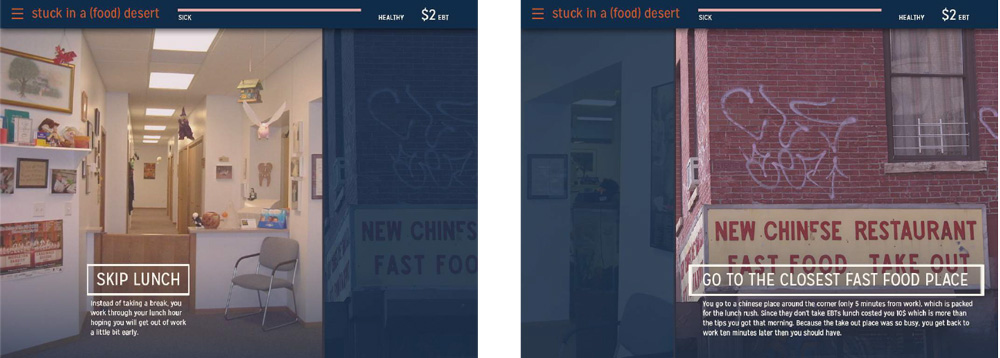
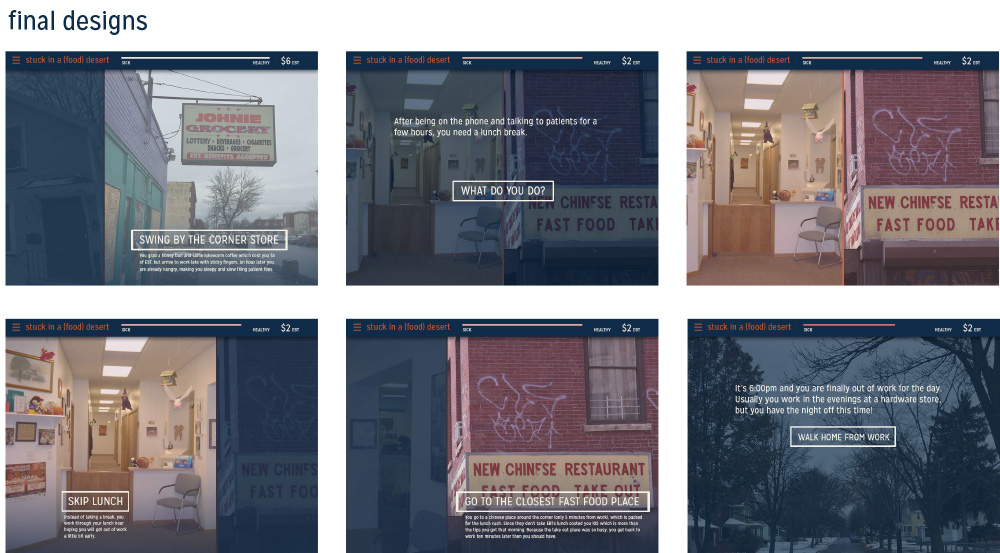
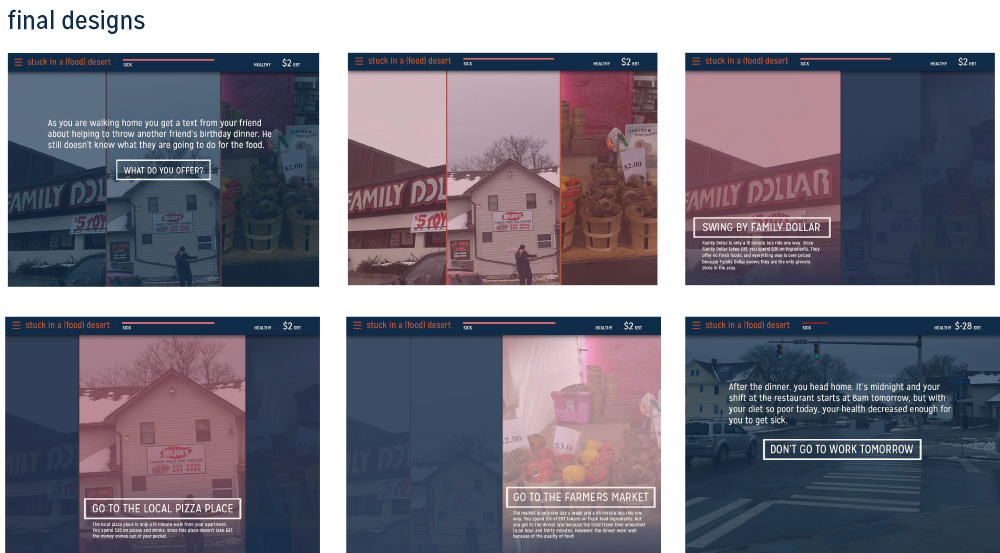
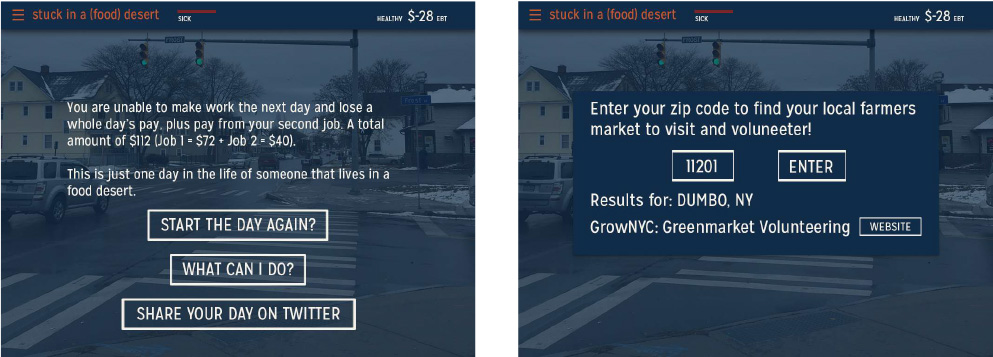
This game prototype raises awareness about food deserts by putting the user in uncomfortable situation of living in one, and worrying about their money and food. The game envelops players in the food desert experience as they try to balance a monthly EBT food budget of $194 USD (706 QAR).
Players make choices that impact their health, finances, employment, family, and other important factors, revealing the myriad challenges imposed by food deserts and shedding light on an often overlooked urban crisis. .
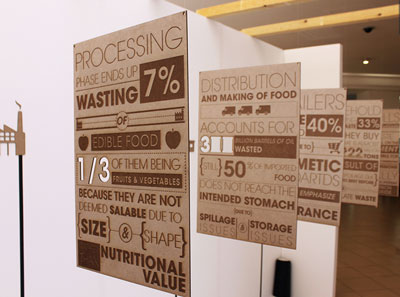
Meanwhile, on the other side of the world in Doha, Qatar, Liz's partners Mohammed and Abdul created a physical exhibit about food waste. Check it out in the food section of the classes' joint exhibit website, "REstart."
Online ExhibitCould YOU live for a day in a food desert?
Selected process work